


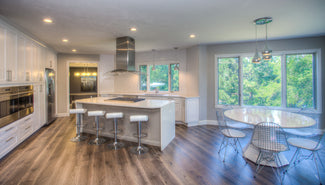
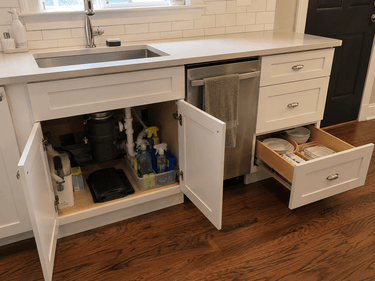
Drawer base cabinets and door base cabinets both belong in a well-planned kitchen. The question is not whether drawers are always better than doors. The better question is where each cabinet type works best.
Drawer base cabinets make everyday storage easier to see and reach. Door base cabinets are still useful for sinks, corners, large items, trash pull-outs, and flexible storage.
If you are ordering RTA kitchen cabinets online, choosing the right mix can make your kitchen easier to cook in, clean up, and organize. Before choosing cabinets by appearance, think about what each base cabinet needs to store and how often you need to reach it.
Quick Answer: Drawer Base or Door Base Cabinets?
Drawer base cabinets are usually better for everyday access. They work well for pots, pans, lids, utensils, containers, baking tools, dish towels, and smaller items that are easier to see from above.
Door base cabinets are better when you need open interior space. They work well for sink plumbing, garbage disposals, bulky items, pull-out trash systems, blind corner cabinets, lazy Susan corners, adjustable shelves, and storage accessories.
For most kitchens, the best answer is a mix:
- Use drawer bases near the range, prep zone, dishwasher, and island.
- Use door bases for sink areas, corners, trash, and large storage.
- Use pull-outs where narrow spaces need to become useful storage.
- Plan cabinet types around cooking, prep, cleanup, and storage zones, not only appearance.
Drawer Base vs Door Base Cabinet Comparison Chart
| Cabinet Type | Best For | Watch Out For |
|---|---|---|
| Drawer Base Cabinet | Cookware, utensils, containers, bowls, towels, prep tools, and island storage | Wide drawers can get heavy; usable drawer box space is smaller than cabinet width |
| Door Base Cabinet | Large items, sink plumbing, trash pull-outs, adjustable shelves, and specialty inserts | Items can get lost in the back without roll-out trays or organizers |
| Drawer-and-Door Base | Small top drawer plus open lower storage | Less drawer storage than a full drawer base |
| Pull-Out Base Cabinet | Spices, oils, tray storage, trash, narrow gaps, and vertical storage | Usually serves a specific purpose; not as flexible as a regular cabinet |
| Corner Base Cabinet | Lazy Susan, blind corner storage, and corner pull-out systems | Needs filler, door swing, and clearance planning |
Use this chart to choose the cabinet type first, then confirm the exact cabinet configuration on the product page. A cabinet’s outside size does not always tell you how the inside storage will work.
If you are still comparing standard base cabinet sizes, The Spruce provides a general standard kitchen cabinet dimensions guide. Use outside references as a starting point, then confirm the exact width, height, depth, and configuration on each cabinet product page before ordering.
What Is a Drawer Base Cabinet?
A drawer base cabinet is a lower cabinet with drawers instead of standard cabinet doors. Many drawer bases have three drawers: a shallow top drawer and two deeper drawers below.
Other configurations may include two large drawers, four smaller drawers, or specialty drawer layouts. The right option depends on what you plan to store and where the cabinet sits in the kitchen.
Most standard kitchen base cabinets are around 34-1/2 inches high and 24 inches deep. Drawer base widths vary by cabinet line, but common planning widths include 15, 18, 21, 24, 27, 30, and 36 inches.
When comparing drawer bases, remember that the usable drawer box is smaller than the cabinet’s outside width. Drawer glides, cabinet frame, drawer box thickness, and clearance all reduce the inside drawer space you can actually use.
If you are still checking overall cabinet size, read our standard kitchen cabinet height guide and kitchen cabinet depth guide before finalizing your cabinet list.

What Is a Door Base Cabinet?
A door base cabinet is a lower cabinet with one or two doors. It may include an adjustable shelf inside, or it may have an open interior for plumbing, trash systems, organizers, or bulky items.
Door base cabinets are common because they are flexible. They can work for large pots, small appliances, cleaning supplies, baking pans, mixing bowls, sink bases, and many corner cabinet layouts.
The tradeoff is access. With a basic shelf cabinet, items in the back can be harder to reach, which is why some homeowners add roll-out trays, pull-out shelves, or internal organizers later.

When Drawer Base Cabinets Work Better
Choose drawer base cabinets when access matters more than open interior space. They are strongest in high-use areas where you want to pull storage toward you and see items from above.
Near the Range or Cooktop
Drawer bases near the range work well for pots, pans, lids, cooking utensils, oven mitts, and baking tools. Deep lower drawers are especially helpful because you can see cookware from above instead of reaching into a dark cabinet.
Near the Prep Zone
A drawer base near the main prep counter can hold knives, cutting boards, measuring cups, food wrap, towels, and small tools. This keeps prep tools close to the work surface.
Near the Dishwasher
Drawer bases near the dishwasher can make unloading easier. Many homeowners store plates, bowls, containers, or dish towels in lower drawers near the dishwasher instead of carrying everything across the kitchen.
In a Kitchen Island
Islands are often a good place for drawer base cabinets. Drawers can store cookware, lunch containers, baking supplies, serving pieces, kids’ dishes, and prep tools.
If the island is part of the main work zone, drawer access can be more useful than deep shelves. Just make sure the drawers can open without blocking the main walkway or seating area.

When Door Base Cabinets Work Better
Door bases are not outdated; they solve different layout problems. They work best when the cabinet interior needs to stay open, adjustable, or flexible.
Sink Base Cabinets
A sink base needs open interior space for the sink bowl, drain, water lines, garbage disposal, and sometimes a water filter. This is why most sink bases use doors and a false drawer front instead of a full drawer stack.
If you are planning the sink area, read our sink base cabinet dimensions guide before finalizing the cabinet list.
Trash Pull-Out Cabinets
Some trash and recycling systems are installed behind a cabinet door or pull-out front. These are not the same as regular drawer bases, even though the storage pulls out.
A trash pull-out needs enough interior height, bin clearance, and pull-out hardware space to work properly.
Large Appliance Storage
Door base cabinets can work better for bulky countertop appliances such as stand mixers, slow cookers, large pots, roasting pans, and cleaning supplies. A wide open cabinet can be more forgiving than fixed drawer heights.
Corner Cabinets
Lazy Susan and blind corner base cabinets usually use special door or pull-out configurations. They need to be planned around corner access, fillers, and door swing, not treated like standard drawer bases.
If your base run turns a corner, review our corner kitchen cabinet dimensions guide.

Drawer Bases vs Door Bases by Kitchen Zone
Instead of choosing all drawers or all doors, plan each lower cabinet by the task around it. A kitchen works better when storage is placed near the cooking, prep, cleanup, and appliance zones it supports.
| Kitchen Zone | Better Cabinet Choice | Why |
|---|---|---|
| Cooking zone | Drawer base | Good for pots, pans, lids, and cooking tools |
| Sink zone | Door base | Needs room for sink bowl, plumbing, and disposal |
| Dishwasher zone | Drawer base or door base | Drawer bases are useful for dishes and containers; door bases can hold larger items |
| Corner zone | Lazy Susan, blind corner, or specialty corner cabinet | Needs special access and clearance planning |
| Island | Drawer base | Easy access from prep and cooking areas |
| Trash zone | Pull-out or door base | Trash systems need specific interior space |
| Pantry overflow | Door base or pull-out | Works for dry goods, bins, or vertical organizers |
For broader clearance planning, the NKBA kitchen planning guidelines are useful for understanding work aisles, appliance locations, clearances, and work areas.
Your final cabinet plan should still be based on your actual room measurements and product dimensions.
Pull-Outs, Roll-Out Trays and Hybrid Storage
The choice is not only drawers versus doors. Many kitchens use hybrid storage to get better access without losing the flexibility of a larger cabinet interior.
A pull-out base cabinet usually has a specific internal organizer that slides out. It may be used for spices, oils, trays, baking sheets, trash, or narrow pantry items.
Roll-out trays are different. They are usually installed inside a door base cabinet, so you open the cabinet door first and then pull the tray forward.
This can make a door cabinet feel more like drawer storage while keeping the flexibility of a larger cabinet interior. For example, a door base with roll-out trays can be a good option for small appliances, cookware, or pantry overflow.

Common Layout Mistakes
Most drawer-versus-door mistakes happen when homeowners choose cabinets by appearance before checking storage needs, clearance, and workflow.
Using drawer bases everywhere
Drawers are convenient, but not every base cabinet should be a drawer base. Sink areas, corners, trash systems, and some large storage zones often need door or specialty cabinet configurations.
Choosing wide drawers without thinking about weight
Wide drawers can hold a lot, but they can become heavy when filled with cookware. Plan what will actually go inside before choosing very wide drawer bases.
Putting drawers too close to corners
A drawer near a corner can hit the adjacent cabinet run, handle, dishwasher, or appliance if filler space is not planned correctly.
Filler space is the small spacer area that helps cabinet fronts and handles clear each other.
Ignoring appliance door swing
Dishwashers, ovens, and refrigerators all need room to open. Do not place a drawer base where it will conflict with an appliance door in daily use.
Forgetting that cabinet width is not drawer box width
A 24-inch drawer base does not have a 24-inch usable drawer interior. The drawer box is smaller because of the cabinet construction and hardware.
Not planning storage by workflow
A beautiful cabinet layout can still be frustrating if storage is in the wrong place. Store cooking tools near the range, prep tools near the prep zone, and dish storage near the dishwasher when possible.
How to Measure Before Choosing Drawer or Door Base Cabinets
Before ordering cabinets, prepare a simple kitchen sketch. You can use our Kitchen Measuring Guide to mark wall lengths, windows, doors, appliances, openings, and obstacles.
For drawer and door base planning, measure and mark:
- Full wall lengths
- Sink location
- Dishwasher location
- Range and refrigerator location
- Corner cabinet location
- Island or peninsula clearance
- Door and drawer opening paths
- Any pipes, vents, outlets, switches, or access panels
The right mix of drawer bases and door bases depends on more than wall length. It also depends on appliance swing, corner clearance, storage zones, and how the kitchen will be used every day.
If you are not sure how many drawer bases or door bases your kitchen needs, submit your measurements, sketch, photos, or blueprint through our Free Kitchen Cabinet Design.

FAQ: Drawer Base vs Door Base Kitchen Cabinets
Are drawer base cabinets better than door base cabinets?
Drawer base cabinets are often better for everyday access. Door base cabinets are better for sinks, corners, trash pull-outs, large items, and flexible storage.
Where should I use drawer base cabinets?
Use drawer base cabinets near the range, prep zone, dishwasher, and island. These are areas where easy access can make daily cooking and cleanup more efficient.
Where should I use door base cabinets?
Use door base cabinets for sink bases, lazy Susan corners, blind corners, trash pull-outs, large items, and areas where open interior space is more useful than stacked drawers.
Are drawers good for pots and pans?
Yes. Deep lower drawers are often useful for pots, pans, lids, mixing bowls, and cooking tools. Choose a drawer size and configuration that makes sense for heavier cookware.
What is the standard depth of a drawer base cabinet?
Many standard kitchen drawer base cabinets are 24 inches deep, matching standard base cabinet depth. Always check the exact product dimensions before ordering.
Can I replace all lower cabinets with drawers?
You can use many drawer bases in a kitchen, but replacing every lower cabinet with drawers is usually not practical. Sink bases, corner cabinets, trash systems, and some storage zones may still need doors or specialty configurations.
Choose Drawer and Door Base Cabinets by Storage Zone
Drawer base cabinets and door base cabinets both have a place in a functional kitchen. Drawer bases are easier for everyday access, while door bases are better for open storage, plumbing, corners, trash, and specialty organizers.
The best layout starts with the main kitchen zones. Plan the sink, dishwasher, range, refrigerator, corners, and island first. Then decide where drawers will make daily use easier and where doors will provide better flexibility.
Explore our base cabinets to compare drawer base, door base, sink base, pull-out, and corner cabinet options. You can also read our base kitchen cabinets with drawers guide for more storage layout ideas.
If you want help building the full cabinet list, request a Free Kitchen Cabinet Design & Quote.